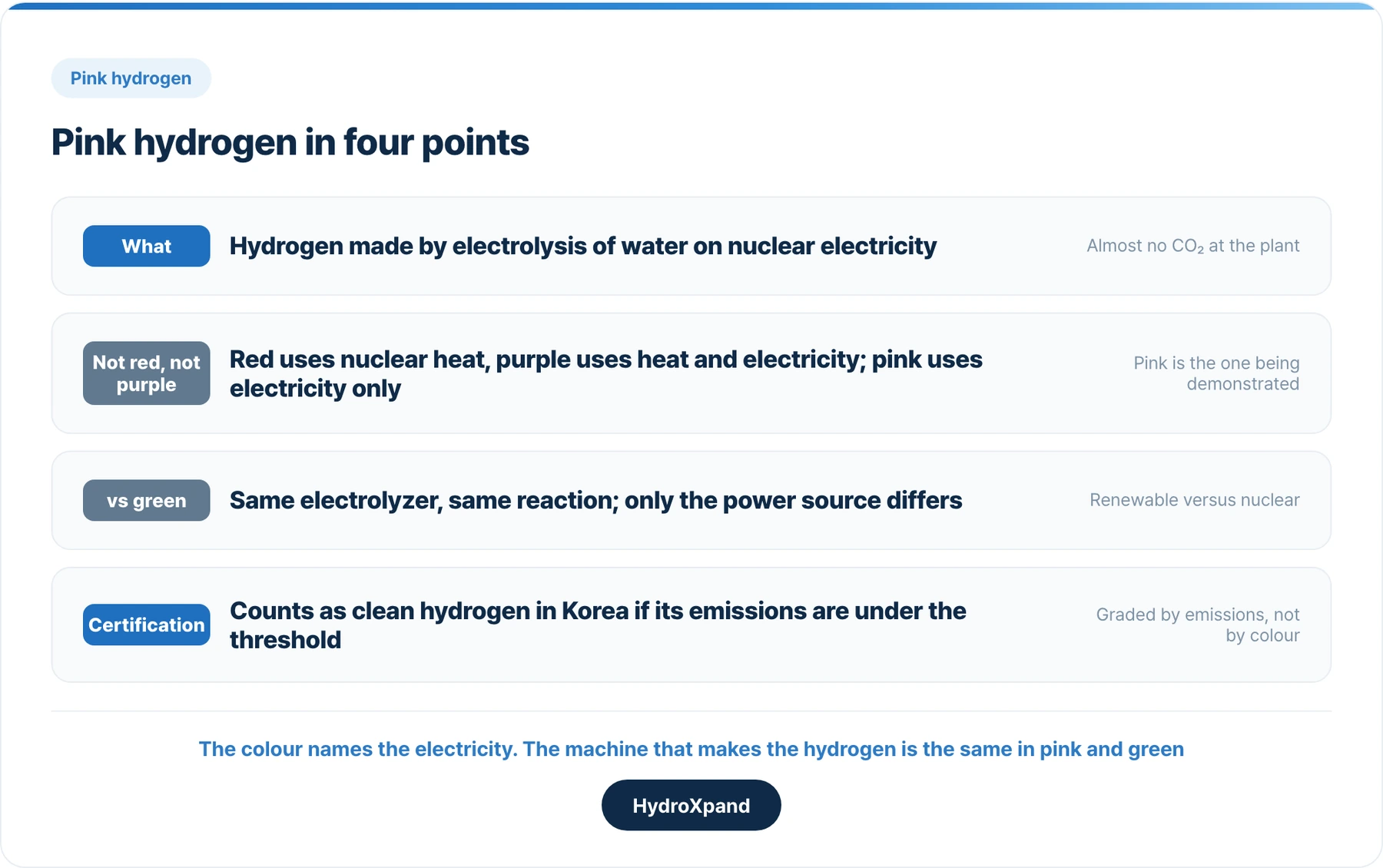
Pink hydrogen is hydrogen made by splitting water with electricity from a nuclear plant. The process is the same electrolysis that makes green hydrogen; only the power source differs. This article sets out what pink hydrogen is, how it differs from red and purple nuclear hydrogen and from green, its advantages and limits, where it stands in Korea's certification scheme, and how different countries treat it.
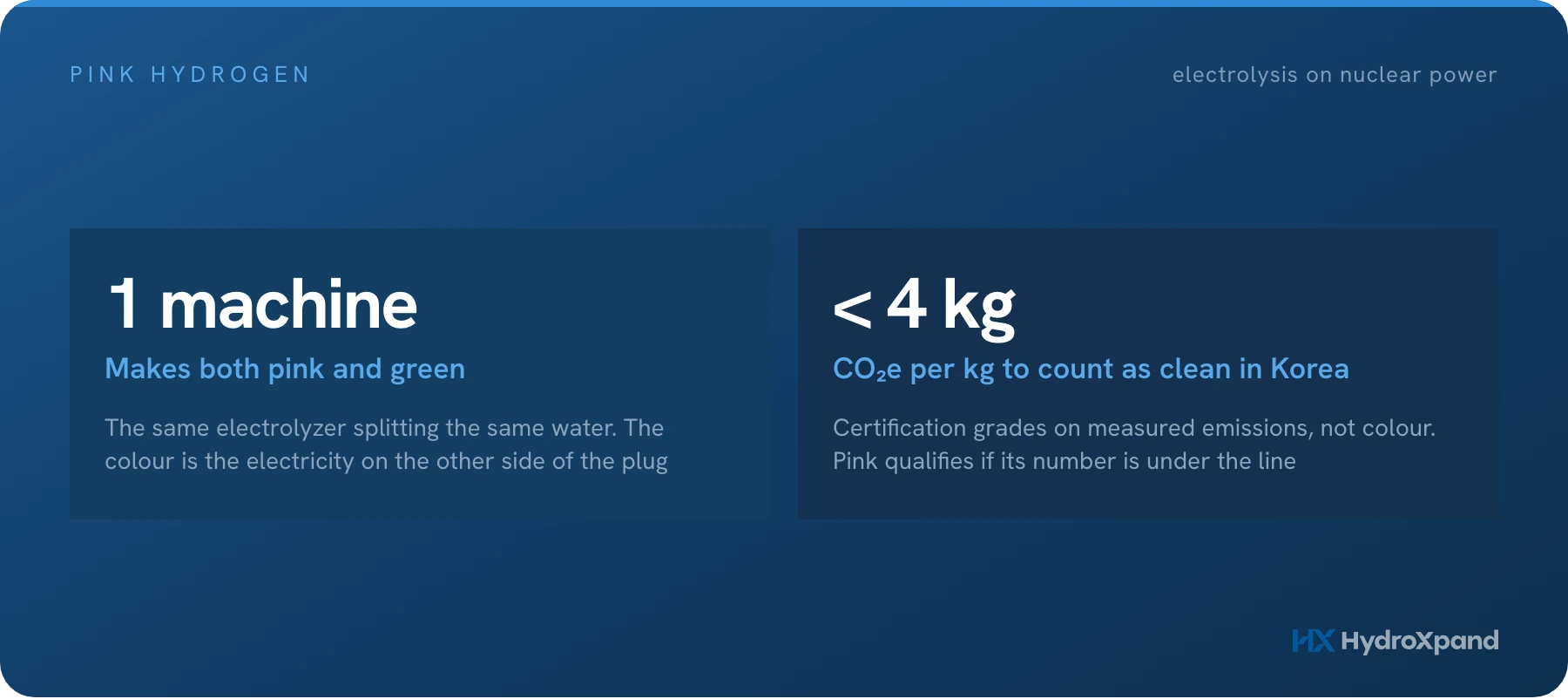
Hydrogen is sorted into colours by how it is made. After grey, blue and green, the name that now appears most often is pink: hydrogen produced by electrolysis of water using electricity from a nuclear power plant. It is separated from green hydrogen by its power source, nuclear rather than renewable, and joined to it by everything else, because the process that makes both is the same.
This article covers what pink hydrogen is, how it differs from the other nuclear hydrogens, red and purple, how it compares with green, what its advantages and limits are, where it stands under Korea's clean hydrogen certification, and how Korea and other countries are treating it.
What pink hydrogen is
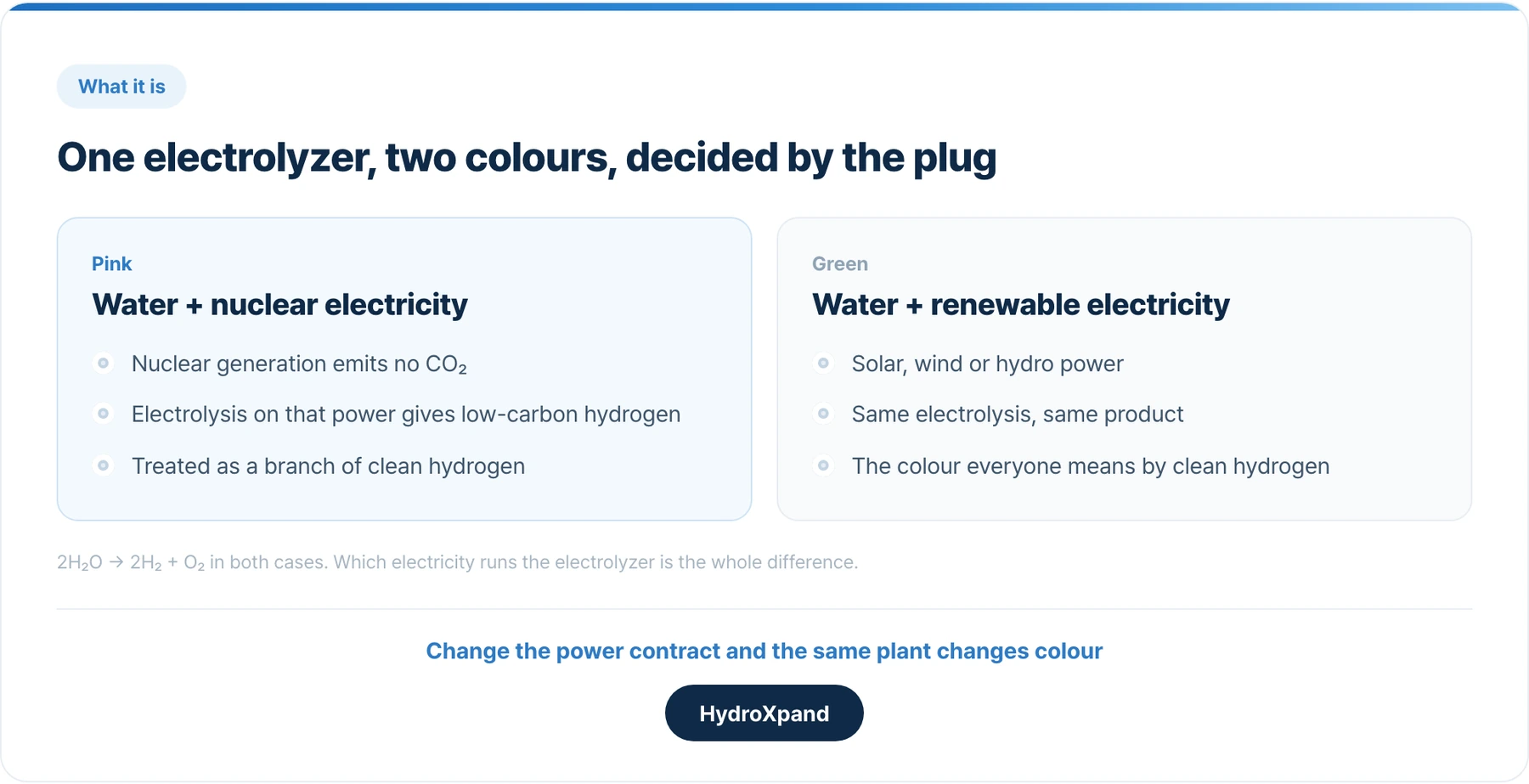
Pink hydrogen is hydrogen made by electrolysis of water using electricity generated by nuclear power. The production principle is electrolysis: pass a current through water and it separates into hydrogen and oxygen. Which electricity is used decides the colour of the result. Renewable electricity gives green hydrogen; nuclear electricity gives pink.
Because a nuclear plant emits no carbon dioxide while generating, hydrogen made from its electricity carries very little CO₂ from production. That is why pink hydrogen is treated as a branch of low-carbon or clean hydrogen, alongside green.
Pink, red and purple: the three nuclear hydrogens
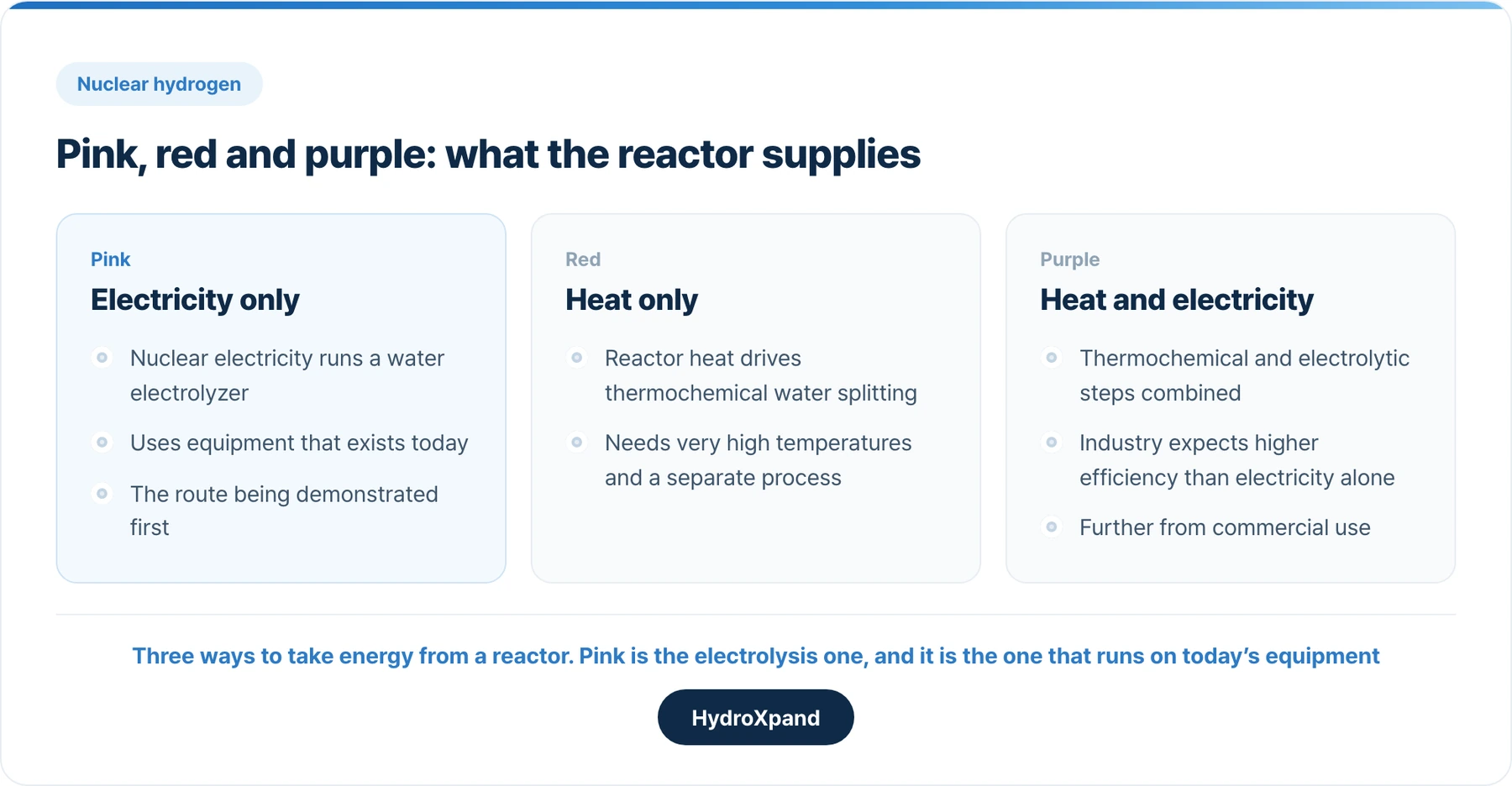
Hydrogen from nuclear energy comes in three named forms, depending on what the reactor supplies. Pink hydrogen uses the reactor's electricity to run a water electrolyzer. Red hydrogen uses the reactor's heat to split water thermochemically, without electrolysis. Purple hydrogen uses both, combining thermochemical and electrolytic steps.
The difference is which form of energy is taken from the reactor: electricity only, heat only, or both. Industry expects the combined route to be more efficient than electricity alone, but thermochemical splitting needs very high temperatures and a separate process, so in practice the electrolysis route, pink hydrogen, is the one being demonstrated first, on equipment that already exists.
| Pink | Red | Purple | |
|---|---|---|---|
| Energy from the reactor | Electricity | Heat | Heat and electricity |
| Process | Water electrolysis | Thermochemical water splitting | Both combined |
| Status | Being demonstrated on existing equipment | Needs high temperatures and a new process | Further from commercial use |
Pink against green
Pink and green hydrogen are both made by water electrolysis, and both release almost no CO₂ in production. What divides them is the electricity. Green uses renewable power from solar or wind; pink uses nuclear power.
That difference carries into operating conditions. Renewable output varies with weather and time of day, so an electrolyzer on renewables cannot run continuously. Nuclear output is steady and its capacity factor high, so an electrolyzer on nuclear power runs around the clock. In exchange, pink hydrogen can be made only in countries that have nuclear plants, while green hydrogen can be made anywhere there is a renewable resource. The electrolysis technology is not what separates them; the power source is.
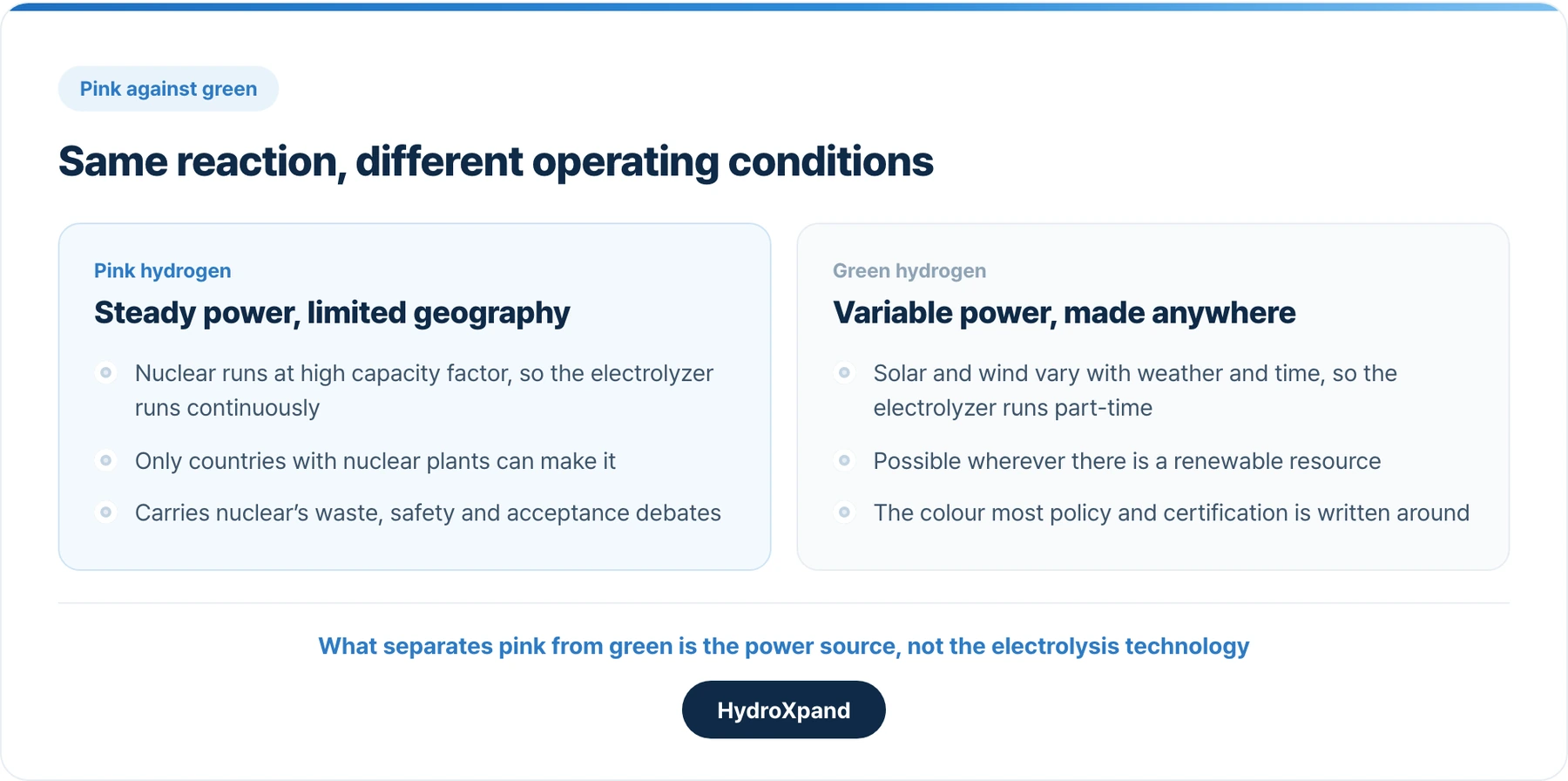
What separates pink from green is the power source, not the electrolysis technology.
SourceU.S. DOE Office of Nuclear Energy: nuclear plants gearing up for clean hydrogen production
Advantages and limits
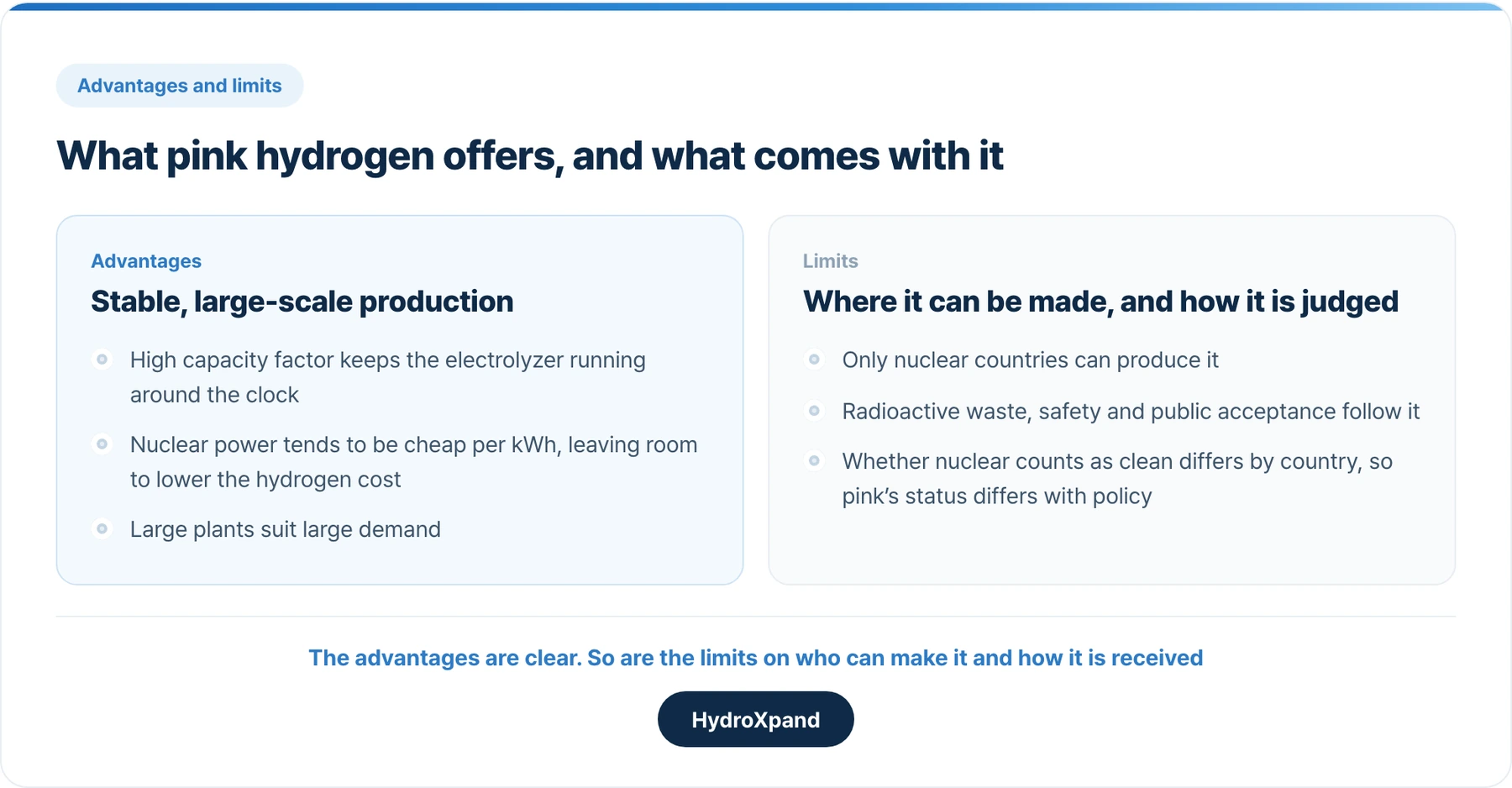
The advantage of pink hydrogen is stable production at scale. A nuclear plant's high capacity factor keeps the electrolyzer running without the interruptions renewables impose, and because nuclear electricity tends to be cheap per kilowatt-hour, industry sees room to bring the cost of the hydrogen down. Large nuclear plants also suit large hydrogen demand.
The limits are geographic and social. Only countries with nuclear plants can make pink hydrogen, which restricts who can produce it. And everything that accompanies nuclear power, the handling of radioactive waste, safety, and the public acceptance of new reactors, accompanies pink hydrogen too. Whether nuclear counts as clean energy is judged differently from one country to the next, so the standing of pink hydrogen shifts with policy.
Certification, and where countries stand
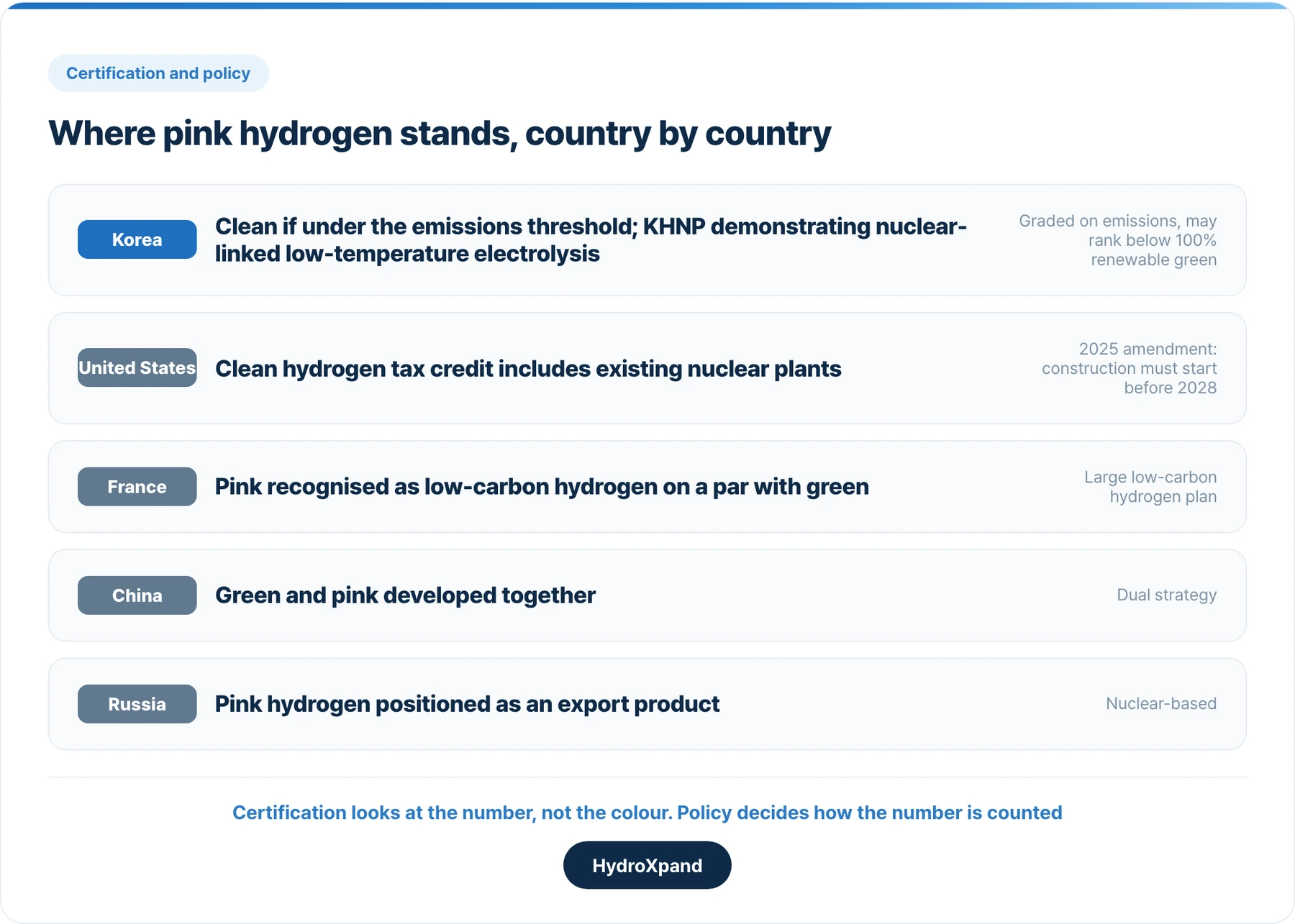
Korea manages the cleanliness of hydrogen through its clean hydrogen certification scheme, which certifies hydrogen produced with under 4 kg of CO₂ equivalent per kilogram and grades it by measured emissions. Nuclear hydrogen is recognised as clean if it meets the threshold. The grade, though, is set by the actual number, not by the production route, and conditions such as the link to grid power mean pink hydrogen may land in a lower grade than green hydrogen made from 100% renewable electricity.
In Korea, KHNP is running demonstrations of low-temperature electrolysis linked to nuclear power with partners including Samsung C&T, Doosan Enerbility and Hyundai E&C, and Samsung C&T and KHNP are preparing a nuclear-linked pink hydrogen plant. Abroad the picture varies. The United States includes existing nuclear plants in its clean hydrogen production tax credit, though a 2025 amendment brought the deadline forward to projects that begin construction before 2028. France formally recognises pink hydrogen as low-carbon hydrogen on a par with green and has a large low-carbon hydrogen plan. China develops green and pink together, and Russia positions pink hydrogen as an export product.
Pink hydrogen and the electrolyzer
The part that is easy to miss is that the core equipment of pink hydrogen is the electrolyzer. Whether the power comes from a reactor or a wind farm, the job of splitting water into hydrogen and oxygen belongs to the electrolysis plant. The power source decides what electricity is supplied; the technology that actually makes the hydrogen is electrolysis.
KHNP's nuclear-linked demonstrations are built on low-temperature electrolysis. Alongside alkaline electrolysis, the anion exchange membrane route, which combines iridium-free catalysts with a solid membrane, is being developed as the next generation of that equipment. As electrolysis improves and its equipment cost and electricity consumption fall, the cost of clean hydrogen falls with it, pink or green alike.
- Read the colour as a statement about the electricity, not about the equipment. Pink and green come from the same machine.
- For certification, ask for the measured emissions per kilogram; that number, not the colour, sets the grade.
- Pink hydrogen's advantage is continuous operation; its limit is that only nuclear countries can make it and that nuclear's debates come with it.
- Whatever the power source, the cost of clean hydrogen comes down through the electrolyzer.
HydroXpand develops AEM electrolysis from materials to systems, with electrodes, stacks and systems sold today from 2 kW research and pilot units to a 30 kW stack, to bring the cost of clean hydrogen down whichever electricity it runs on.
- Hydrogen colours: what the names leave out→All the colours in one table, and why green and pink are the same machine.
- Korea's clean hydrogen certification→The 4 kg ceiling, the four grades and the electricity rules that decide where pink lands.
- Korea's hydrogen economy in 2026→The policy turn towards green and pink hydrogen, and the demonstration plants.
- What is water electrolysis→The reaction and the four numbers fixed per kilogram, whatever the power source.
- AEM water electrolysis: how it works→The next-generation low-temperature electrolysis HydroXpand builds.
Frequently asked questions
Is pink hydrogen clean hydrogen?
It is low-carbon hydrogen, because nuclear generation emits almost no CO₂ and the electrolysis itself none. Whether it is called clean or green depends on the country: Korea certifies it as clean if it meets the emissions threshold, France treats it on a par with green, and elsewhere the debates around nuclear power, waste and safety, follow it.
Is pink hydrogen cheaper than green hydrogen?
Industry expects it can be, because nuclear plants run at high capacity factor and their electricity tends to be cheap per kWh, so the electrolyzer runs continuously. The actual cost depends on the cost of the nuclear plant, the scale of the electrolyzer and national policy.
What is the difference between pink, red and purple hydrogen?
What the reactor supplies. Pink uses nuclear electricity to run a water electrolyzer; red uses nuclear heat to split water thermochemically; purple uses both. Pink is the route being demonstrated first, because it runs on existing electrolysis equipment.
Does Korea make pink hydrogen?
KHNP is running demonstrations of low-temperature electrolysis linked to nuclear power with several partners, and a nuclear-linked pink hydrogen plant is being prepared with Samsung C&T. Production at commercial scale will take more time.
Sources
- 3 Nuclear Power Plants Gearing Up for Clean Hydrogen Production — U.S. Department of Energy, Office of Nuclear Energy
- Global Hydrogen Review 2025 — International Energy Agency, 2025
Looking at AEM for a specific application?